


A New Search Mandate for Impact Venture Funds
Climate capital is growing. However, proprietary climate deal flow is not. That is becoming one of the defining challenges for impact venture funds today.
Over the last few years, billions of dollars have flowed into climate-focused investing. According to PwC’s State of Climate Tech 2024 report, climate tech financing reached nearly US$79 billion globally between Q4 2022 and Q3 2023, underscoring how rapidly climate has evolved from a niche impact theme into a mainstream investment category.
Funds have launched new climate verticals. Institutional investors have increased allocation targets. Climate has shifted from a niche impact theme to a serious long-term investment category.
Yet despite all the capital entering climate, many investors are still competing for a surprisingly narrow pool of visible startups. It’s not easy to find differentiated, investment-ready startups early enough to matter. The challenge is especially visible in emerging markets.
Some of the most urgent climate problems in the world are driving entirely new categories of innovation across South Asia – from bio-input startups helping farmers reduce chemical dependency, to decentralized cooling systems designed for heat-stressed communities, to waste-to-value businesses building circular supply chains from low-value material streams.
These startups are often too early, too geographically dispersed, or simply too disconnected from institutional capital to appear in conventional deal pipelines. As a result, the conversation within climate venture capital is beginning to change.
The question is no longer just: Who has capital to deploy?
Now it is also: Who has access to the next generation of climate founders before the rest of the market does?
In an increasingly crowded climate investment landscape, early access to overlooked founders and emerging sectors may become one of the few remaining sources of differentiated advantage.
This shift is reshaping how impact venture funds think about sourcing, partnerships, and ecosystem engagement – particularly in regions where climate pressure is accelerating faster than capital formation itself.
Because in climate investing, the next breakout company may not emerge from an established venture hub at all. It may emerge from a region where climate disruption is already forcing businesses, communities, and entrepreneurs to adapt in real time.
The Invisible Pipeline in South Asia
Nowhere is this challenge more evident than in South Asia, a region that accounts for nearly 25% of the global population yet receives a disproportionately small share of global climate venture capital. Despite this funding gap, the region is among the most climate-vulnerable in the world.
A 2025 report by the World Bank estimates that up to 90% of South Asia’s population could be exposed to extreme heat by 2030, underscoring both the urgency of adaptation and the scale of the market opportunity emerging around climate resilience.
While climate financing in South Asia has grown and more than doubled between 2017 and 2021, the flow of early-stage capital remains limited and heavily concentrated in major urban hubs. Recent data from AVPN (2025-26) and other regional reports indicates that early-stage funding remains significantly underpenetrated relative to the region’s actual potential.
This creates a paradox: the region is rich in problem-driven innovation – from agri-resilience tools for smallholder farmers to distributed clean-energy models and localized waste recovery systems – yet much of this innovation remains invisible to global capital.
For impact venture funds, the issue is not a lack of opportunity, but a lack of structured pathways to discover and evaluate it. So, in many cases, the problem is not that climate innovation is missing, it is that institutional capital is still looking in the wrong places.
Rethinking How Climate Startups Are Discovered
For a long time, venture capital operated on the assumption that the best startups would naturally become visible. Founders would emerge through established networks, accelerators, founder circles, or investor referrals. Strong companies would find their way into the pipeline, and investors would compete from there.
In climate, that model is becoming less reliable, especially in emerging markets.
Many of the most promising climate startups in South Asia are being built far from traditional venture ecosystems. Founders are developing low-cost cooling technologies for vulnerable communities, climate-adaptive agricultural tools, and decentralized waste-management systems – often without access to the networks that typically attract institutional capital.
As a result, some of the strongest opportunities remain largely invisible during their formative stages.
This means impact venture funds need to re-think about sourcing.
Rather than waiting for startups to become investment-ready on their own, many funds are moving earlier into the ecosystem – engaging with accelerators, regional platforms, technical partners, and founder-support networks that operate closer to where innovation is actually emerging.
Investors are recognizing that in climate, high-quality deal flow does not simply appear fully formed. It has to be cultivated.
This is particularly important in climate, where development cycles are often longer and capital requirements higher. In 2024, Climate Policy Initiative launched a dedicated Pre-Seed Capital Facility aimed at addressing funding gaps for early-stage climate finance solutions, reflecting a broader recognition that promising climate innovation in emerging markets often struggles to access catalytic early-stage capital.
That is particularly true in sectors where founders are navigating longer development cycles, fragmented markets, infrastructure dependencies, or complex regulatory environments. In these contexts, the gap between a strong idea and an investable company can be significant.
This is where ecosystem-led platforms are becoming strategically important. Beyond simply surfacing startups, they help founders validate technologies, strengthen business models, improve governance readiness, and build credibility with investors. In effect, they reduce friction before formal capital deployment even begins.
For many climate tech investors, ecosystem participation is now becoming part of the investment strategy itself. Funds that engage earlier often gain something far more valuable than pipeline access: they gain context. They develop visibility into emerging founder networks, evolving market behaviour, and sectors that may still be underestimated by mainstream capital.
And in climate venture capital, that informational edge can become a meaningful competitive advantage.
Reframing Emerging Markets as Opportunity, Not Risk
For many climate-tech investors, this shift also requires a change in mindset. Emerging markets, including South Asia, have historically been framed through the lens of risk – regulatory complexity, infrastructure gaps, and market uncertainty. But this framing is increasingly incomplete.
What is becoming evident is that these markets offer something fundamentally different: high-impact innovation shaped by real-world constraints.
Startups operating in these environments tend to be deeply embedded in local systems. They are solving for affordability, accessibility, and resilience – often with business models that are both capital-efficient and highly adaptable. In many cases, this results in solutions that are not only relevant locally, but scalable globally, particularly as climate pressures intensify across geographies.
Some of these ventures may appear highly localized today – whether in bio-inputs, adaptive cooling, or circular waste systems – but many are addressing climate pressures that are rapidly becoming global.
Meanwhile, climate financing in South Asia increased from approximately US$1.4 billion in FY2017 to US$3.7 billion by FY2021, according to World Bank regional data, suggesting that investor interest in the region is growing even as early-stage climate venture pipelines remain underdeveloped.
For impact venture funds, the opportunity may lie less in competing for already visible climate startups, and more in identifying emerging categories and founder ecosystems before they become widely recognized by the market.
Where Platforms Like SAFFAL Fit In
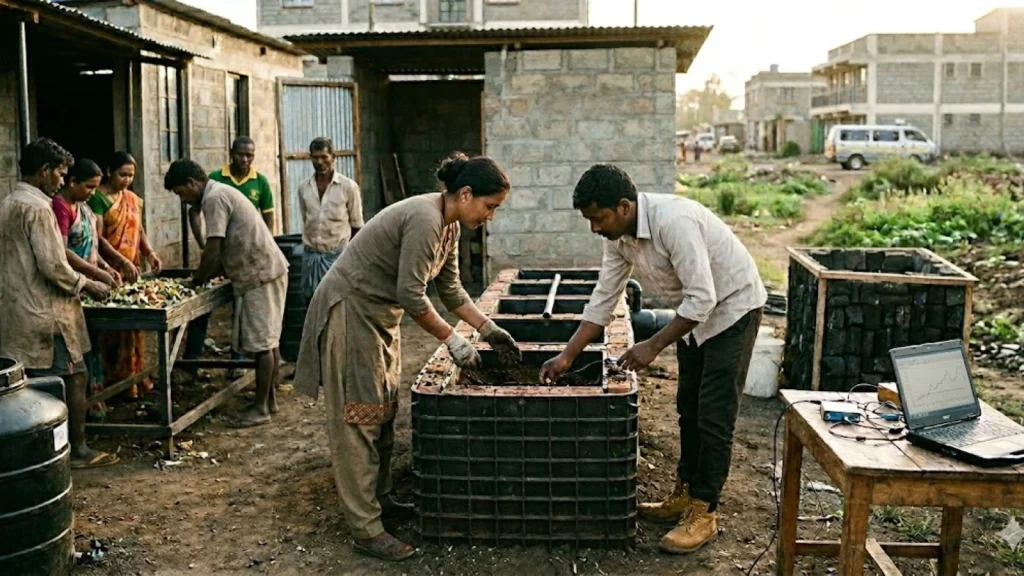
This is precisely where platforms like Project SAFFAL become strategically important.
Operating at the intersection of climate innovation, founder support, and investor engagement, SAFFAL focuses on identifying and nurturing early-stage startups in South Asia, particularly those that are often overlooked in traditional venture pipelines.
SAFFAL helps address the core challenges impact venture funds face:
- Limited visibility into high-quality pipelines
- Lack of investment-ready startups
- High perceived risk in emerging markets
Through structured mentorship, investor exposure, and ecosystem integration, SAFFAL effectively bridges the gap between innovation and capital.
For impact venture funds, this translates into better-quality deal flow, reduced diligence friction, and earlier access to high-potential ventures.
A Structural Shift in Venture Capital
What is unfolding in climate investing is more than a change in sourcing strategy. It reflects a broader evolution in how venture capital creates value.
For many impact venture funds, competitive advantage no longer comes solely from deploying capital. It comes from being closer to emerging ecosystems, understanding markets earlier, and building relationships before opportunities become obvious to the wider market.
This is especially true in climate, where innovation is often shaped by local realities and long-term structural challenges rather than short-term technology trends. As a result, ecosystem participation is becoming part of the investment strategy itself. Funds are not only evaluating startups; they are helping shape the conditions in which future climate ventures can emerge and scale.
In this environment, the strongest portfolios may ultimately be built not just through better investments, but through deeper engagement with the ecosystems that produce them.
Conclusion: Discovering What Others Overlook
The next generation of climate startups will not emerge solely from established hubs or familiar networks. They will come from regions where climate challenges are most immediate, and where innovation is driven by necessity.
The funds that build long-term advantage in climate may not be the ones deploying the most capital. They may be the ones building visibility into ecosystems long before the rest of the market arrives.
Impact investing is about expanding the boundaries of what markets can achieve. In climate venture capital, that expansion begins with discovery.
Several leading climate funds are already expanding sourcing efforts beyond traditional venture hubs, reflecting a broader recognition that some of the most underexplored climate opportunities may emerge from markets that remain structurally overlooked today. Recent climate investment analyses by PwC have highlighted growing investor interest in emerging-market climate adaptation and resilience sectors as climate risks intensify globally.
By the time a climate sector becomes obvious to the broader market, much of the informational advantage has already disappeared.
And that means – impact venture funds need to move NOW, if they haven’t already!